
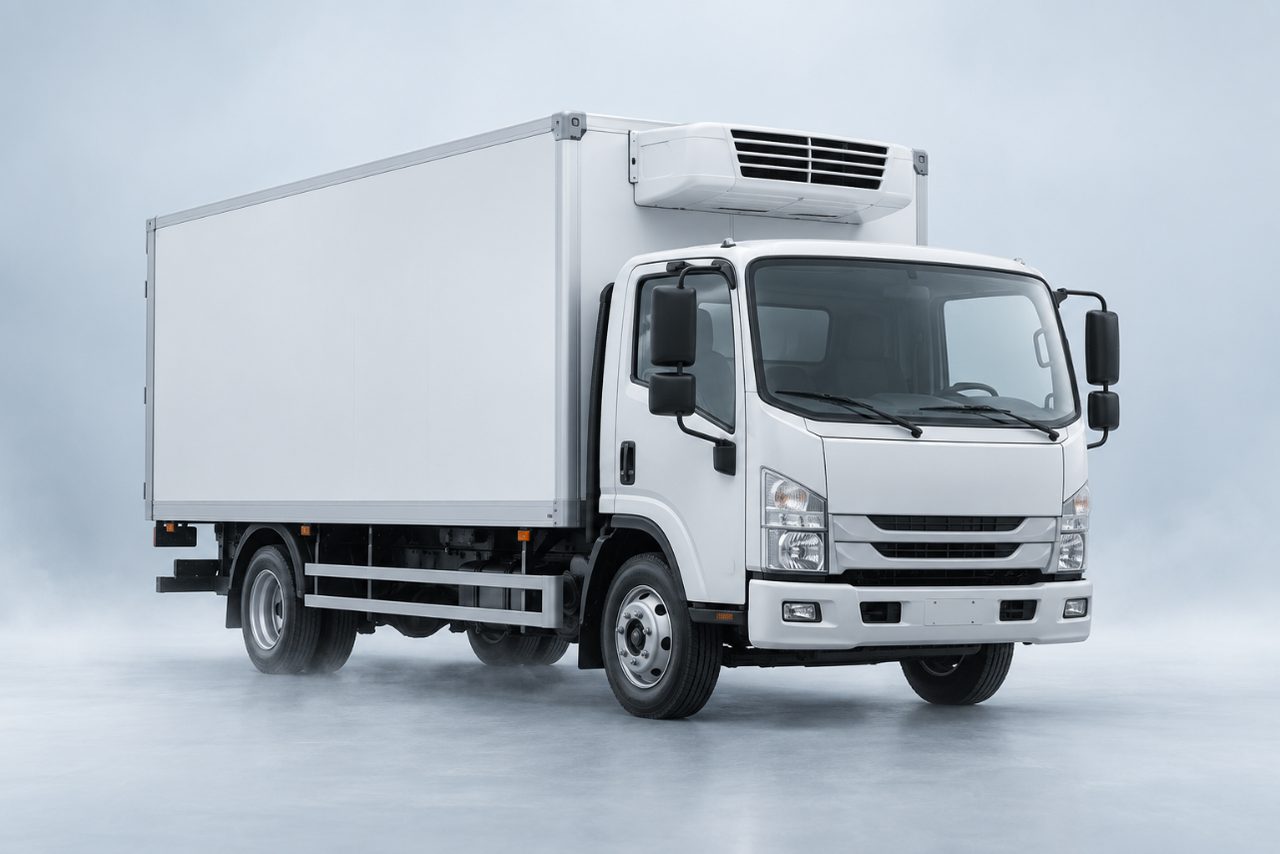
A refrigeration unit that is too small cannot pull the box down after a door opening; one that is too large cycles constantly and costs more than it should. Sizing comes down to four things: box size, insulation, target temperature and how often the doors open.
Step 1: measure the box
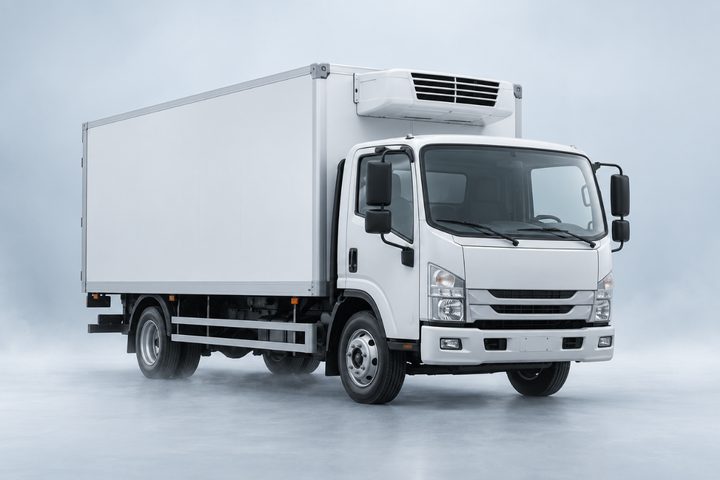
Use inner dimensions. A 4.2 m light truck box is typically about 4.0 × 2.0 × 1.9 m inside, or roughly 15 m³. The surface area of the walls, roof and floor (about 50 m² for that box) matters more for heat load than the volume.
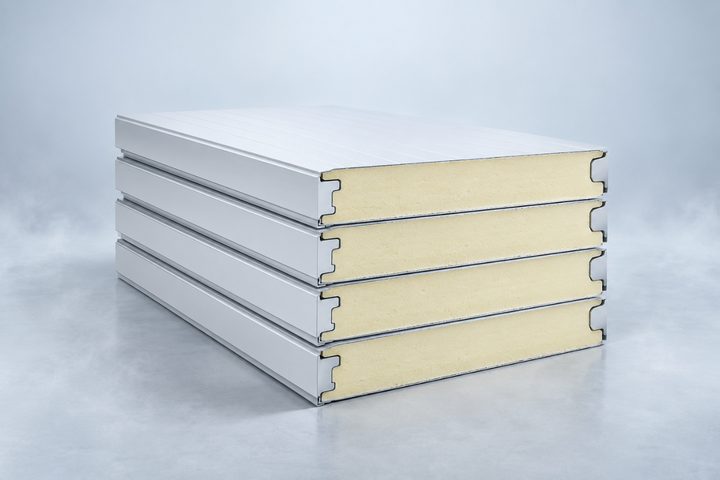
Step 2: know the insulation
Insulated bodies are rated by their overall heat transfer coefficient, K. Under the ATP agreement used across Europe and many other countries, a normally insulated body has K ≤ 0.70 W/(m²·K) and a heavily insulated body K ≤ 0.40 W/(m²·K). Frozen transport needs the heavily insulated class.
| Body | K-value | Suitable for |
|---|---|---|
| Normally insulated (IN) | ≤ 0.70 W/(m²·K) | Chilled goods, 0 °C to +12 °C |
| Heavily insulated (IR) | ≤ 0.40 W/(m²·K) | Frozen goods down to −20 °C |
Step 3: estimate the heat load
Wall heat gain ≈ K × surface area × temperature difference. For the 15 m³ box with K = 0.40, 50 m² of surface and 30 °C outside:
- Chilled at 0 °C: 0.40 × 50 × 30 ≈ 600 W
- Frozen at −20 °C: 0.40 × 50 × 50 ≈ 1,000 W
Then add door openings. Every opening lets warm air in. For multi-drop delivery with 20 or more stops a day, door heat can equal or exceed wall heat. Finally apply a safety margin: ATP testing works with a refrigeration capacity of at least 1.75 times the wall heat loss, and we use similar margins in practice.
Step 4: choose the drive type
| Drive | How it works | Best for |
|---|---|---|
| Direct drive | Compressor belt-driven by the vehicle engine | Vans and light trucks, short urban routes |
| Direct drive + electric standby | Adds a mains-powered compressor | Vehicles parked loaded at a depot |
| Independent diesel | Unit has its own small engine | Large trucks, long-haul, frequent engine-off |
| Electric (DC / battery) | Runs from the vehicle’s high-voltage or 12/24 V system | Electric vans, quiet night delivery |
Step 5: practical checks
- Refrigerant: R404A is standard; R452A where lower-GWP refrigerants are required.
- Compressor bracket must match the exact engine code of your vehicle.
- Temperature recorder or data logger if you carry pharmaceuticals or supply supermarkets.
- Pre-cool the box before loading. A refrigeration unit holds temperature; it is not designed to cool warm product.
What to send for a quotation
Box inner size, insulation thickness, target temperature, number of deliveries per day, vehicle make, model and engine code. We will match the unit and the installation kit.